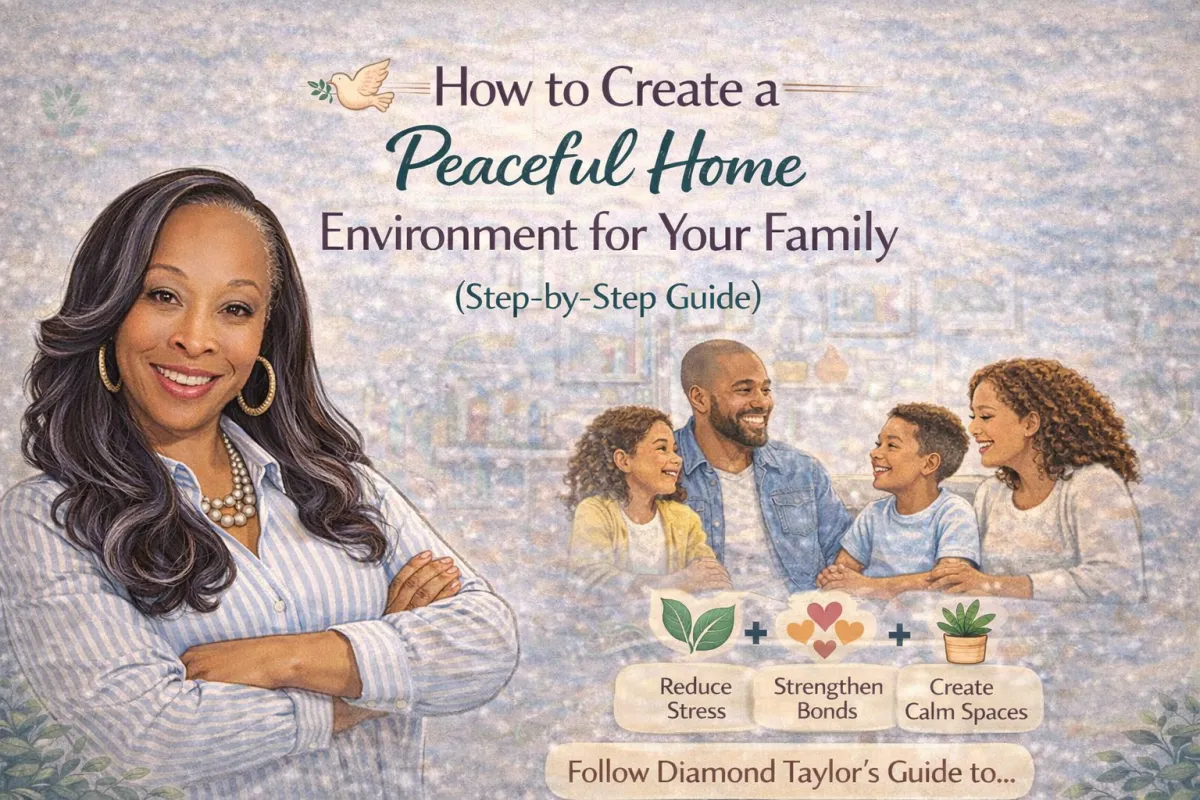
🌿How to Create a Peaceful Home Environment for Your Family (Step-by-Step Guide.)
🌿How to Create a Peaceful Home Environment for Your Family (Step-by-Step Guide)
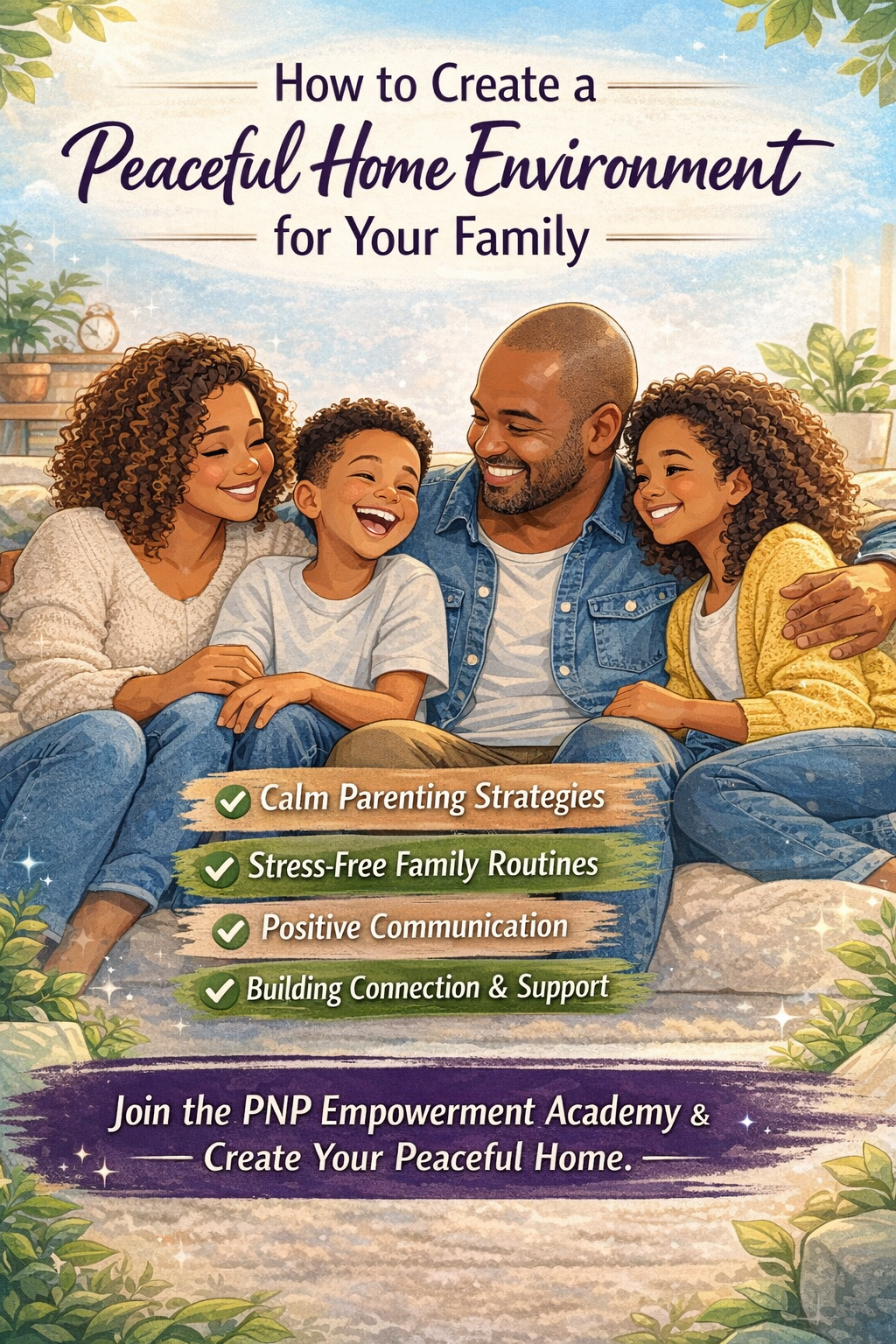
Hey, this is your parenting bestie, Diamond Taylor…
Let’s lean into this together, because creating a peaceful home environment isn’t about perfection… It’s about intention. It’s about becoming the anchor in the storm your family can rely on, even when life gets loud.
And let me tell you this first:
Peace in your home is not accidental; it’s built.
🌿 How to Create a Peaceful Home Environment for Your Family (Step-by-Step Guide)
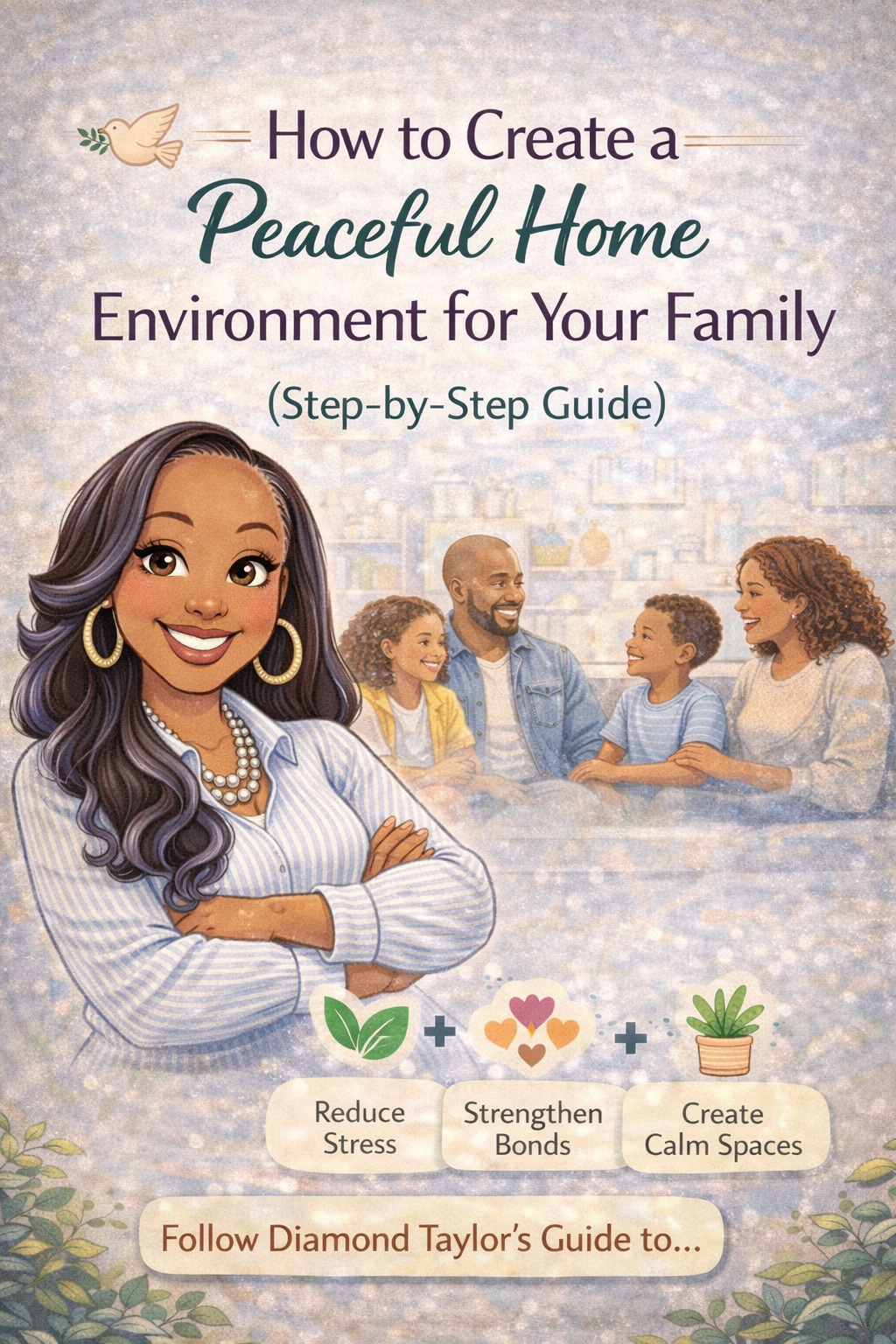
If you’ve been searching for how to create a peaceful home environment, calm parenting strategies, or ways to reduce family stress, you’re in the right place. Let’s break this down into real, doable steps you can start today.

1. Start With Your Energy First (Calm Parenting Begins With You)
Let’s keep it real, friend ☕
Your home will not feel calm if you don’t feel calm.
Children don’t just listen, they absorb.
How to do this:
Pause before reacting (even 5 seconds matters)
Lower your voice instead of raising it
Take intentional breaks when overwhelmed
Practice daily “reset moments” (deep breathing, stepping away)
💡 Small shift, big ripple:
Your regulation teaches your child how to regulate.
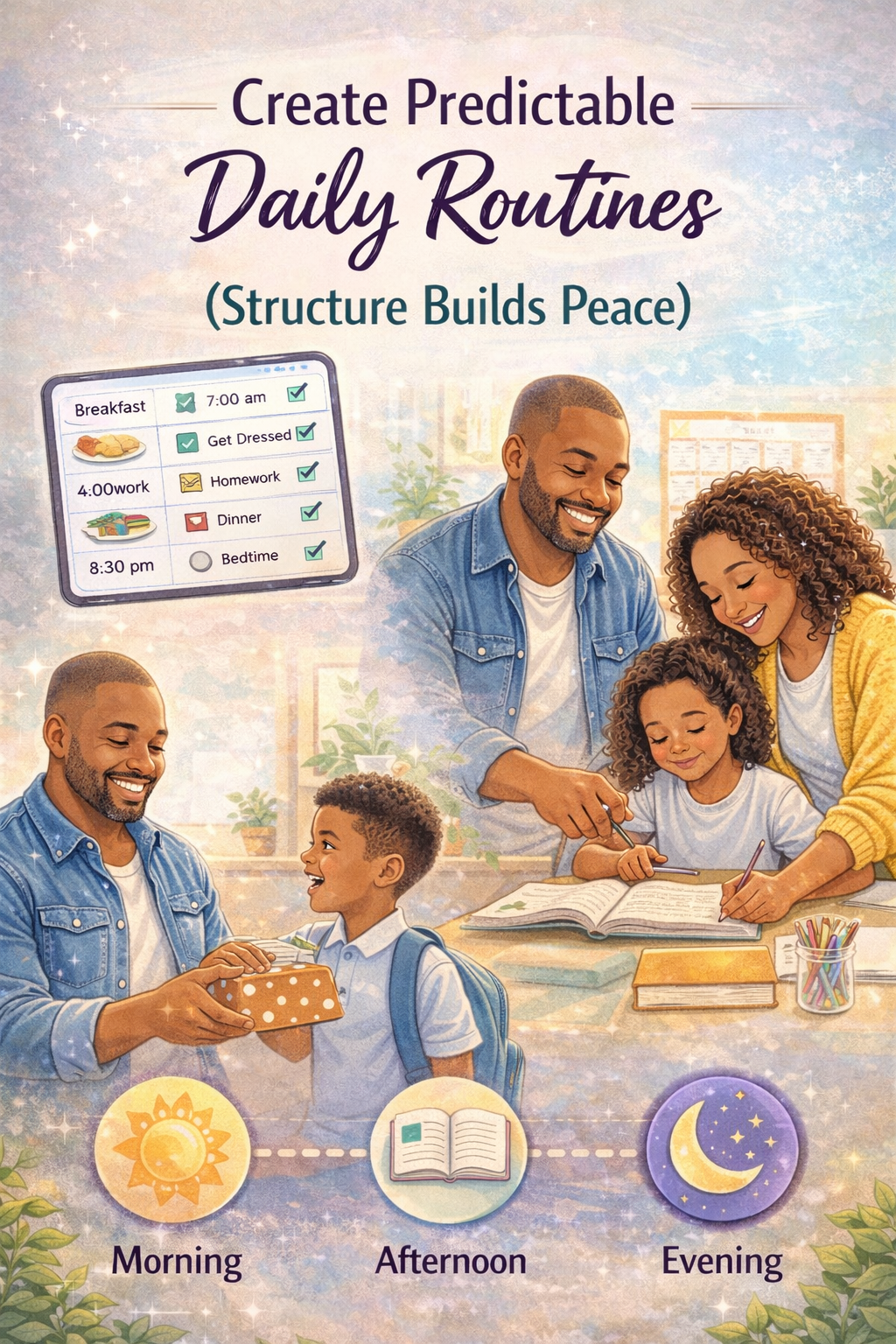
2. Create Predictable Daily Routines (Structure Builds Peace)
Chaos doesn’t just disrupt schedules; it disrupts emotions.
A peaceful home thrives on predictability, not perfection.
How to do this:
Set simple morning and bedtime routines
Anchor the day with 2-3 consistent habits (meals, homework, wind-down time)
Keep routines flexible, but recognizable
💡 Remember:
Routines don’t restrict your family; they support emotional safety.
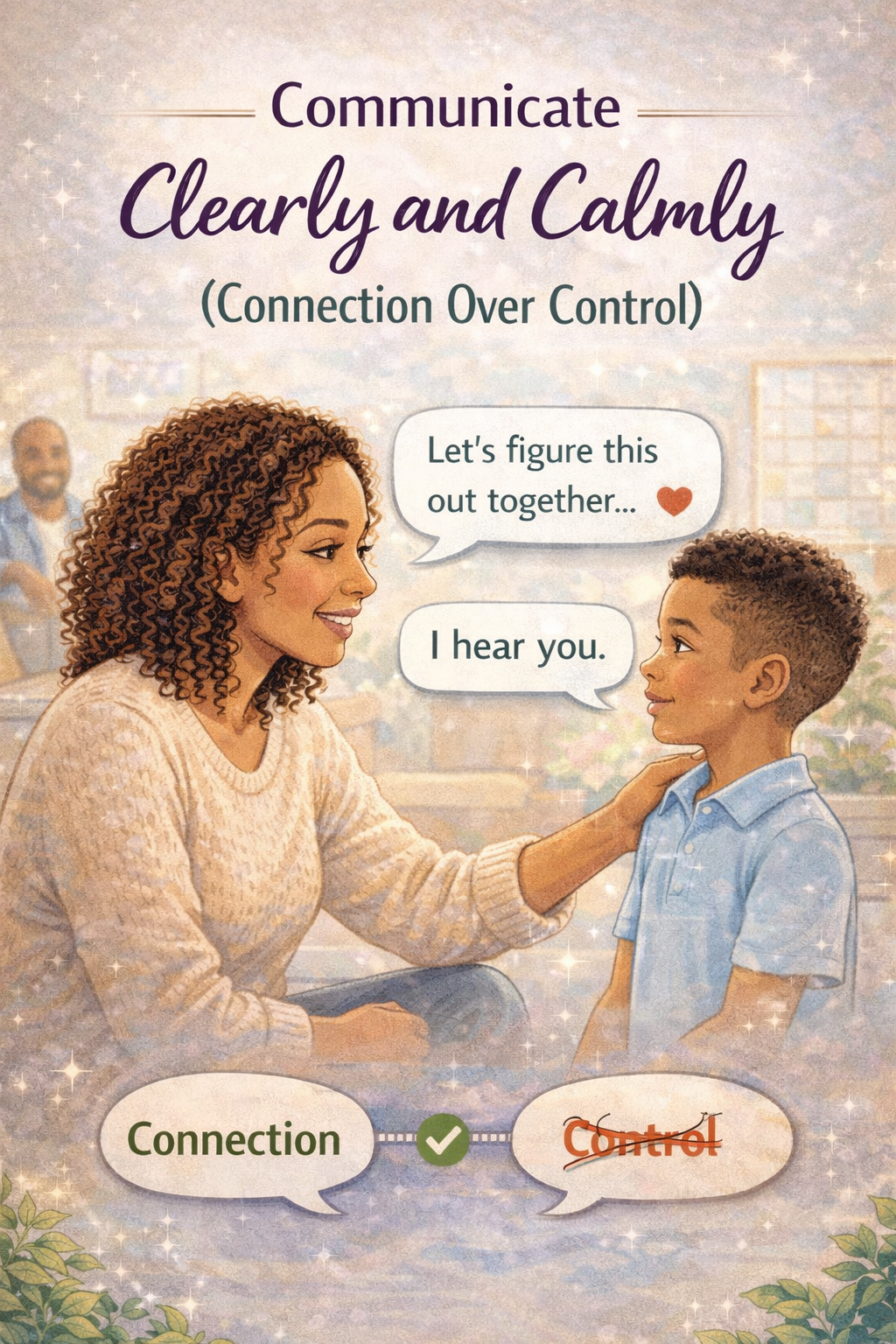
3. Communicate Clearly and Calmly (Connection Over Control)
Peaceful homes are not silent homes; they are communicative homes.
How to do this:
Replace yelling with calm, direct instructions
Use phrases like:
“Let’s try that again calmly.”
“I hear you. Let’s figure this out together.”
Hold weekly family check-ins (yes, even 10 minutes counts)
💡 This aligns with building Communication & Connection, one of your core pillars.
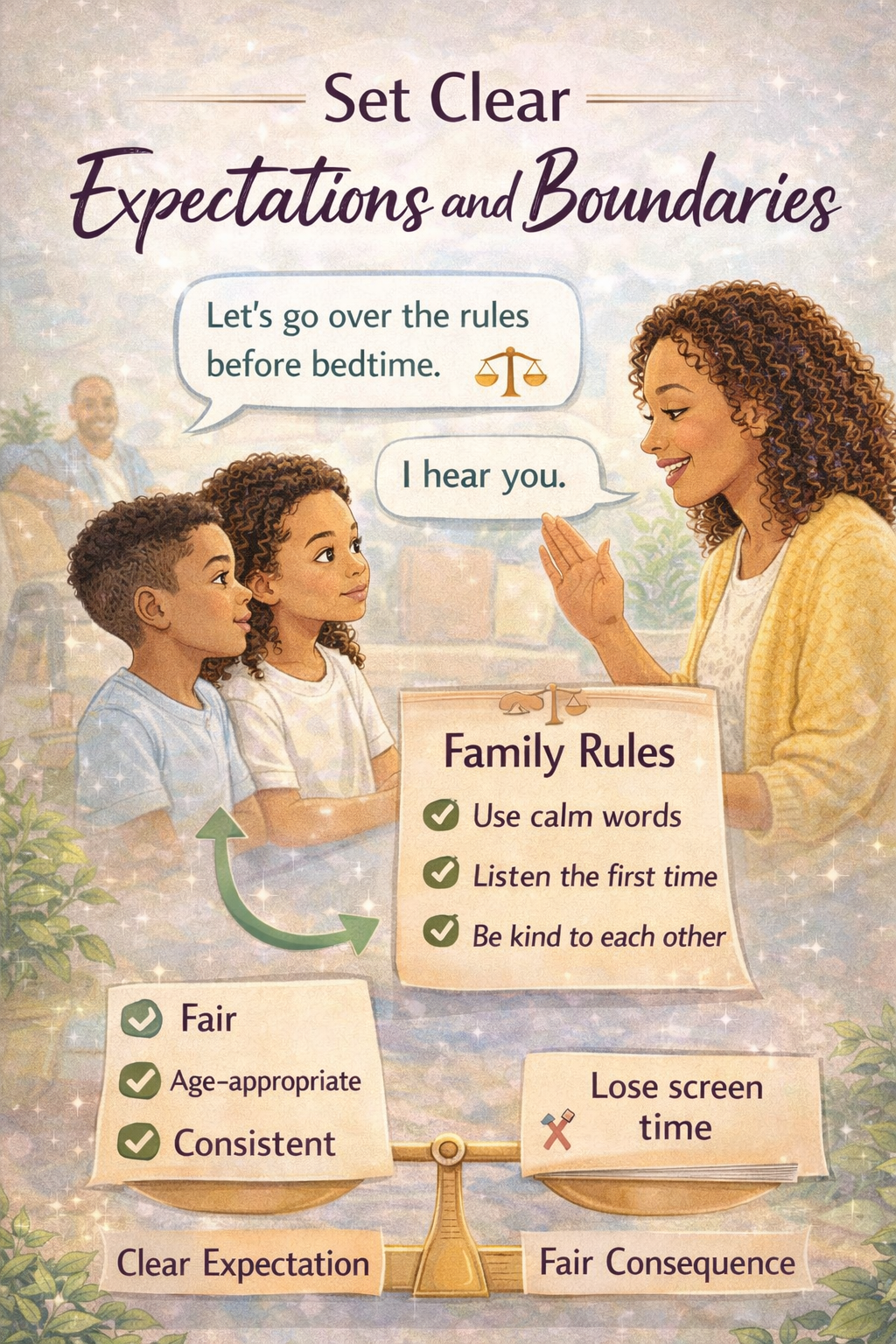
4. Set Clear Expectations and Boundaries
Let me say this gently but clearly:
Unclear expectations create unnecessary stress.
Kids don’t thrive in guesswork; they thrive in clarity.
How to do this:
Clearly state rules ahead of time (not in the moment)
Keep expectations simple and age-appropriate
Follow through calmly (not emotionally)
💡 Calm leadership reduces power struggles every time.
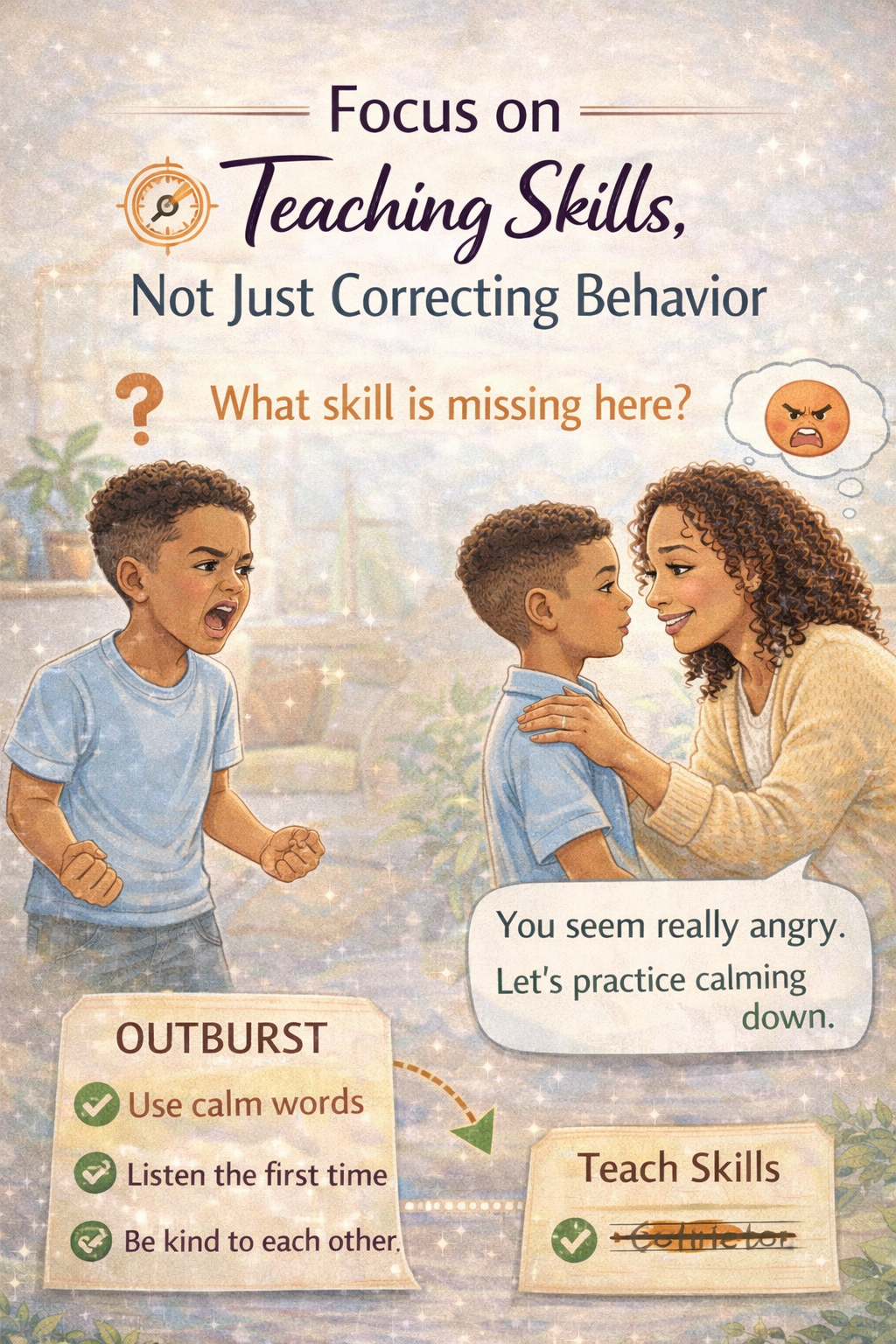
5. Focus on Teaching Skills, Not Just Correcting Behavior
Behavior is communication. Always.
So instead of asking, “How do I stop this?”
Ask: “What skill is missing here?”
How to do this:
Teach emotional regulation (naming feelings)
Model problem-solving out loud
Allow mistakes as learning opportunities
💡 Discipline is about teaching, not controlling.
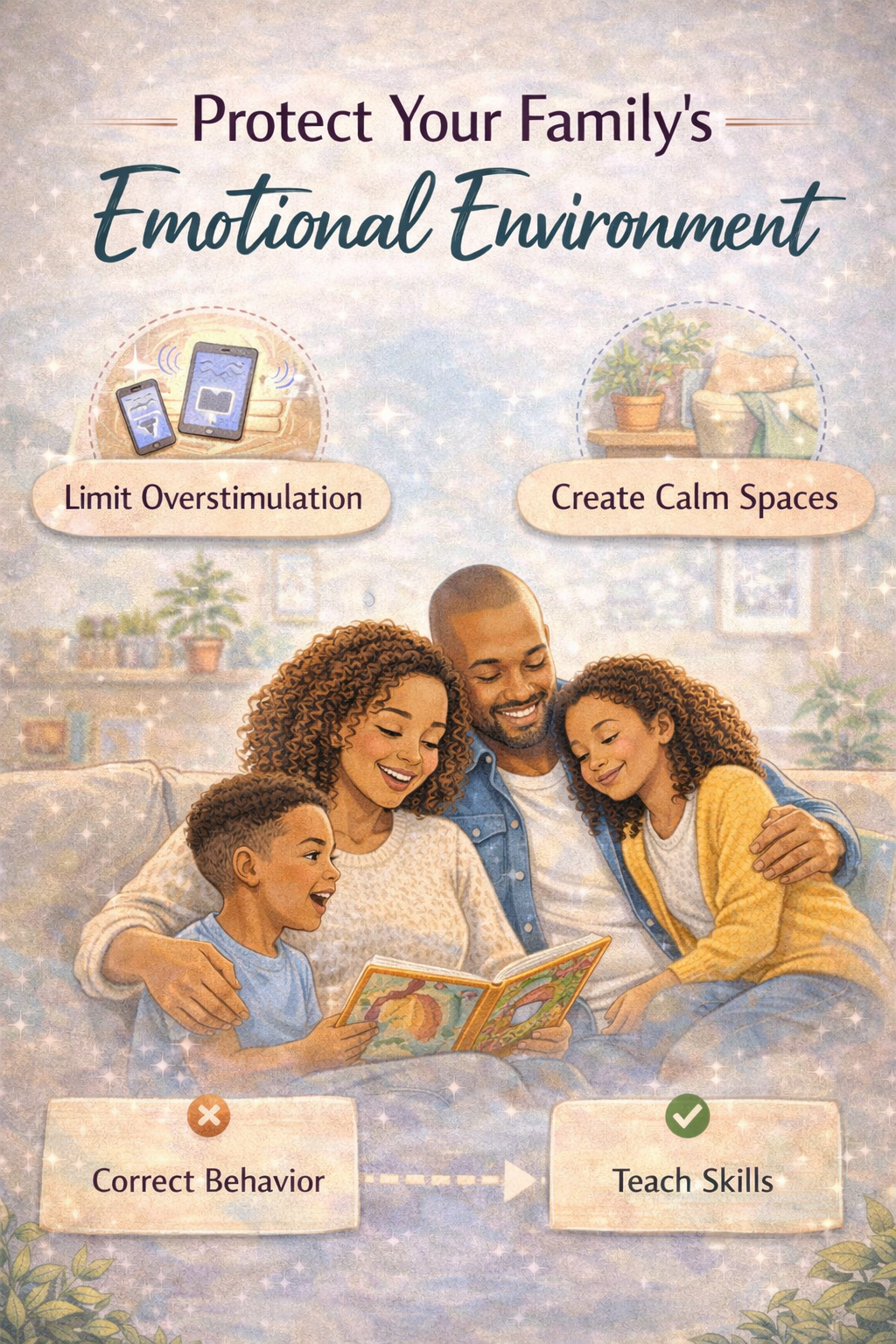
6. Protect Your Family’s Emotional Environment
Peace isn’t just about what you do; it’s about what you allow.
How to do this:
Limit overstimulation (noise, screens, over-scheduling)
Create calm spaces in your home (reading corner, quiet zone)
Be mindful of tone, not just words
💡 Kids remember how home felt more than anything else.
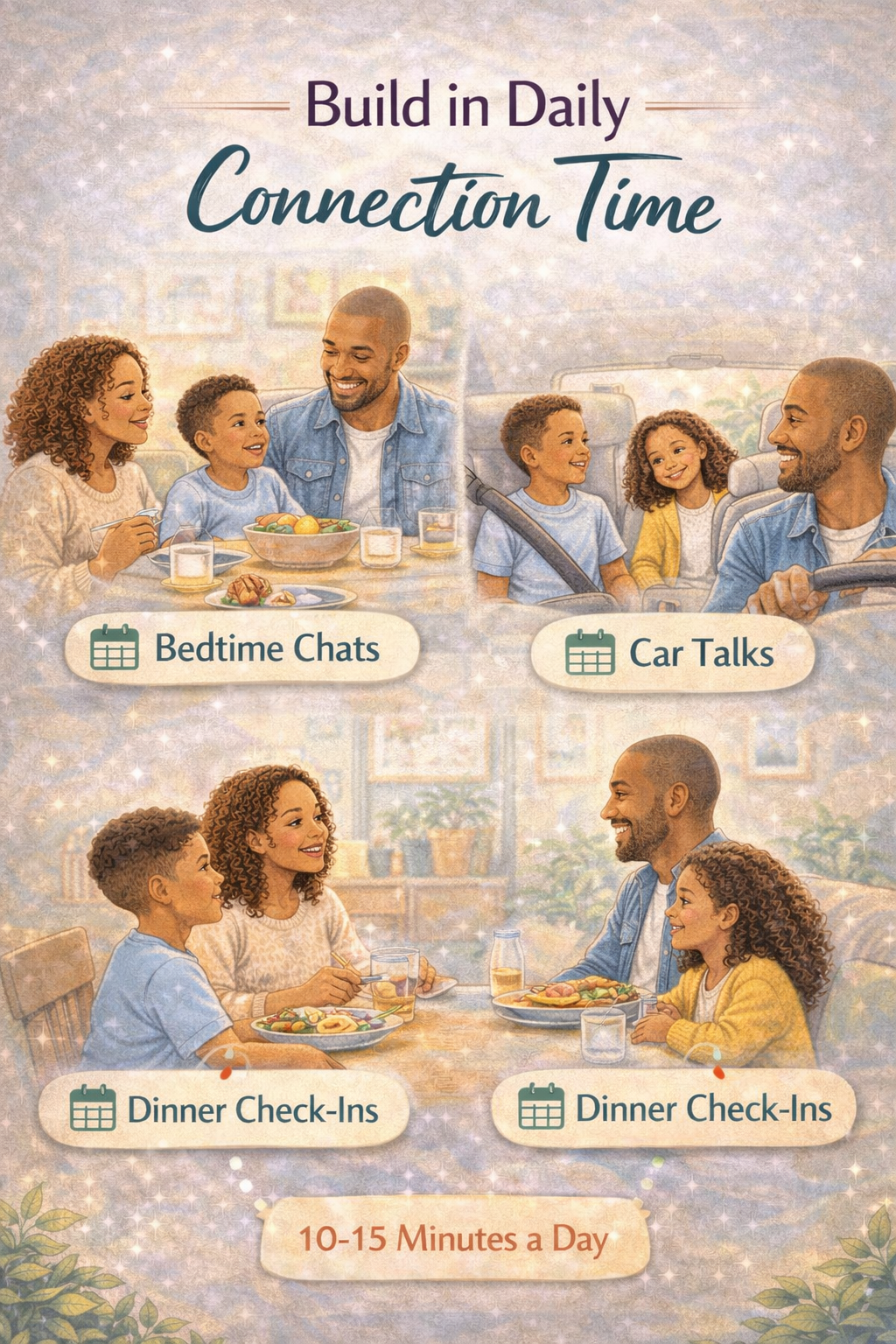
7. Build in Daily Connection Time
You don’t need hours, you need intention.
How to do this:
10 -15 minutes of undivided attention per child
Device-free conversations
Simple rituals (bedtime chats, car talks, dinner check-ins)
💡 Connection reduces behavior issues before they start.
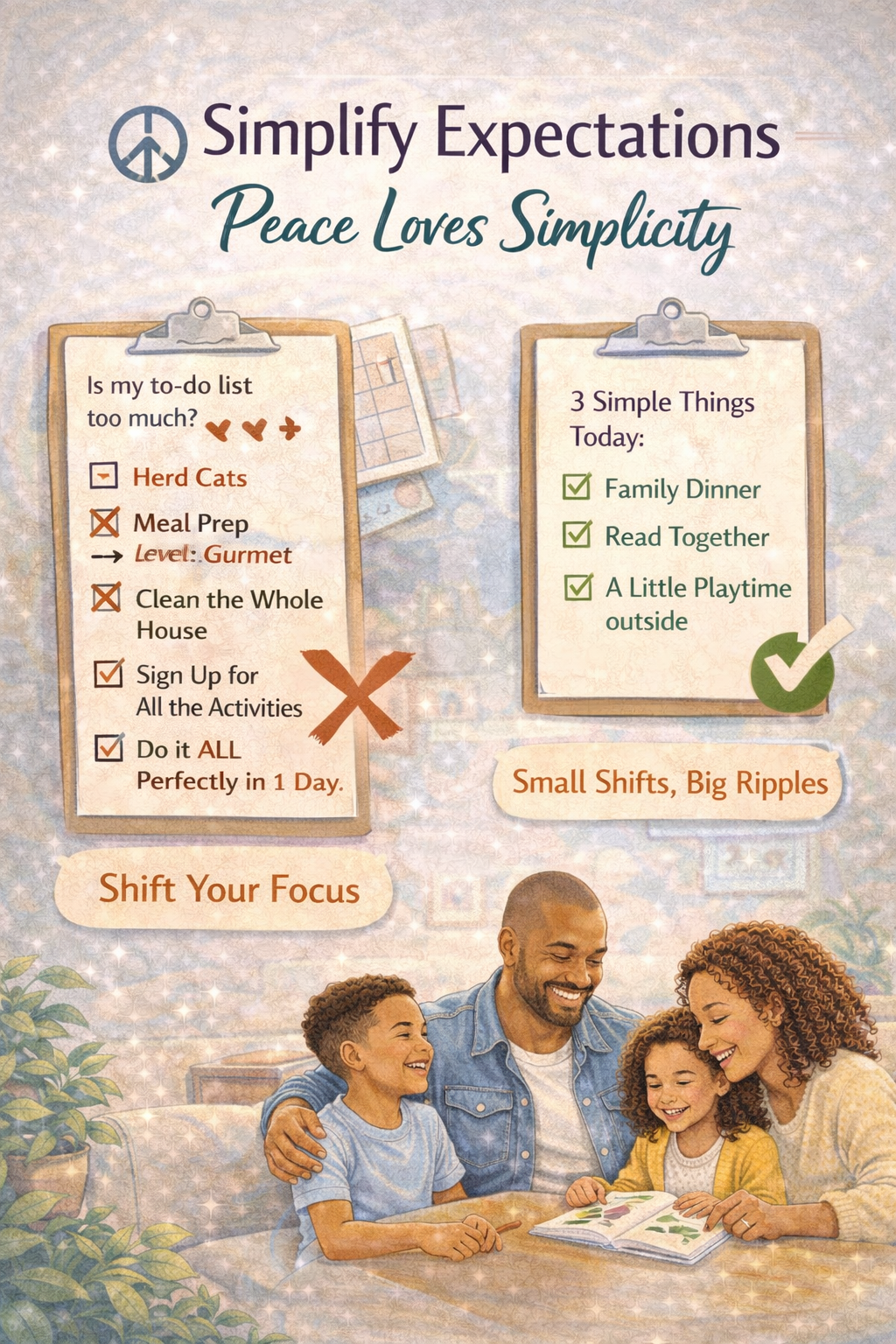
8. Simplify Expectations (Peace Loves Simplicity)
Let’s talk truth for a second…
Trying to do everything perfectly is one of the fastest ways to lose peace.
How to do this:
Let go of unrealistic standards
Focus on what truly matters (connection, safety, growth)
Choose “good enough” when needed
💡 None of us are perfect, and that’s okay.
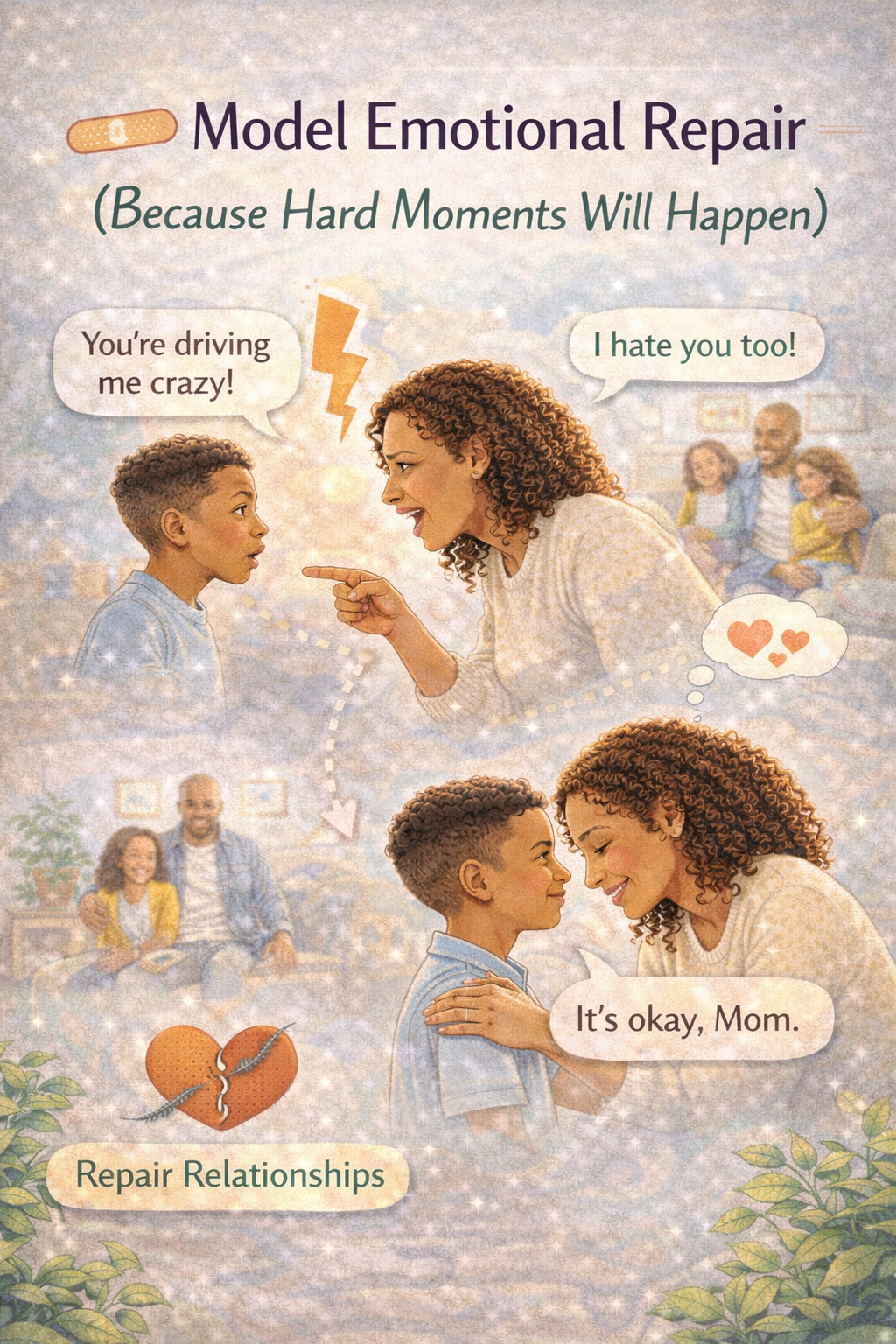
9. Model Emotional Repair (Because Hard Moments Will Happen)
Peaceful homes are not conflict-free.
They are repair-rich.
How to do this:
Apologize when needed (“I shouldn’t have raised my voice”)
Reconnect after conflict
Show your child how to recover from mistakes
💡 This builds trust, and that’s the foundation of peace.

10. Don’t Do This Alone (Community Changes Everything)
Let me remind you of something important:
You were never meant to figure this out by yourself.
This is bigger than tips; it’s about building a system that supports your whole family.
💜 That’s exactly why I created this space for you:
👉Click to join the PNP Empowerment Academy
👉 Or book your Discovery Coaching Call
Inside, we go deeper into:
Calm parenting systems
Family structure that actually works
Emotional regulation for real-life situations
Building a peaceful, thriving home, together
Because peace isn’t just possible… It’s sustainable when you have support.

🌿Final Thoughts: Peace Is Built in Small Moments
Friend to friend ☕
A peaceful home isn’t created overnight.
It’s created in:
The pause before you respond
The routine you keep
The tone you choose
The connection you protect
Small shifts… create big ripples.

If this spoke to you, don’t just read it, apply one step today.
We’re building something bigger than today… and you don’t have to do it alone.
With love and coffee,
Diamond 💜
Remember, it’s always better when we do things together.