
7 Practical Steps to Rebuild Parenting Confidence and Find Calm in the Chaos
Hey, this is your parenting bestie, Diamond Taylor…
If you’ve ever gone to bed replaying the day in your mind, wondering…
“Why did I lose my patience again?”
“Why does this feel so hard?”
“Am I failing my child?”
Take a deep breath, parent friend.
Feeling like you’re failing as a parent does not mean you are failing.
It usually means something else entirely:
It means you care deeply.
It means you’re emotionally invested.
It means you’re carrying a lot.
The truth is, parenting is one of the most emotionally demanding leadership roles you will ever hold.
And here’s what I need you to hear:
Parenting is not a pass-or-fail test. It is a skill-building journey.
If you’re asking how to stop feeling like a bad parent, the answer isn’t found in guilt.
It’s found in reflection, practical shifts, and intentional support.
Here are 7 practical parenting strategies to help you stop feeling like you’re failing and start leading your family with more confidence and calm.

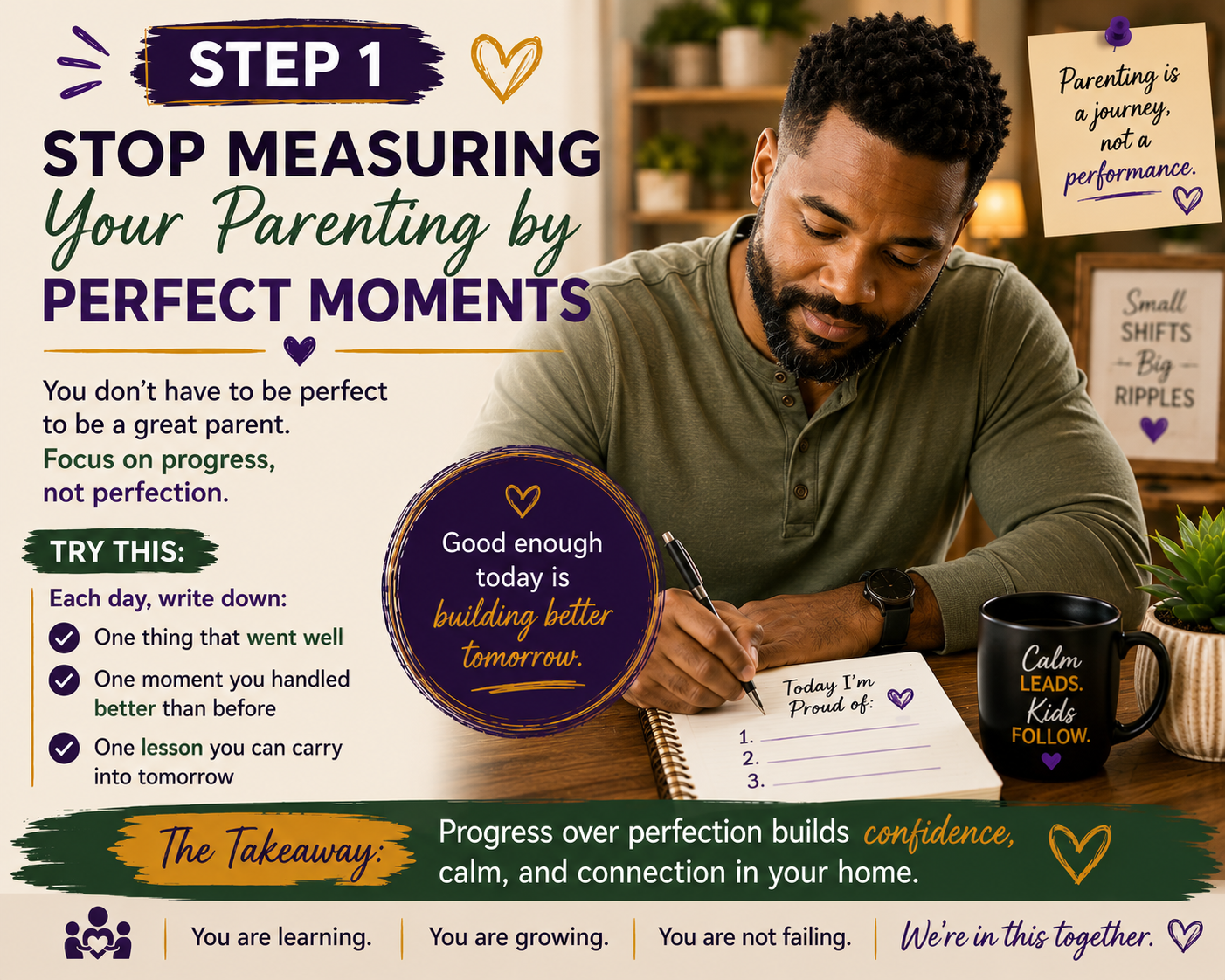
1. Stop Measuring Your Parenting by Perfect Moments
One of the biggest parenting mistakes we make is believing good parenting should look polished all the time.
Social media can convince us that successful parenting looks like:
Calm children at all times
Structured routines every day
Endless patience
Never making mistakes
That’s not real life.
How to shift this:
Instead of asking:
“Was I perfect today?”
Ask:
“Was I present enough to learn from today?”
At the end of each day, reflect on:
One thing that went well
One moment, you handled better than before
One lesson you can carry into tomorrow
This helps build parenting confidence through awareness instead of self-criticism.

2. Learn to Separate a Hard Moment From Your Identity as a Parent
A rough morning does not make you a bad parent.
A raised voice does not define your entire parenting journey.
A child’s meltdown is not proof you’ve failed.
Too many parents turn temporary struggles into permanent labels.
How to stop this pattern:
When a hard moment happens, pause and reframe.
Instead of saying:
❌ “I’m failing as a mom.”
❌ “I’m a terrible dad.”
Say:
✅ “That moment was hard.”
✅ “I didn’t respond how I wanted, but I can repair.”
✅ “I’m learning in real time.”
This is emotional regulation for parents.
And your child learns resilience when they see repair in action.
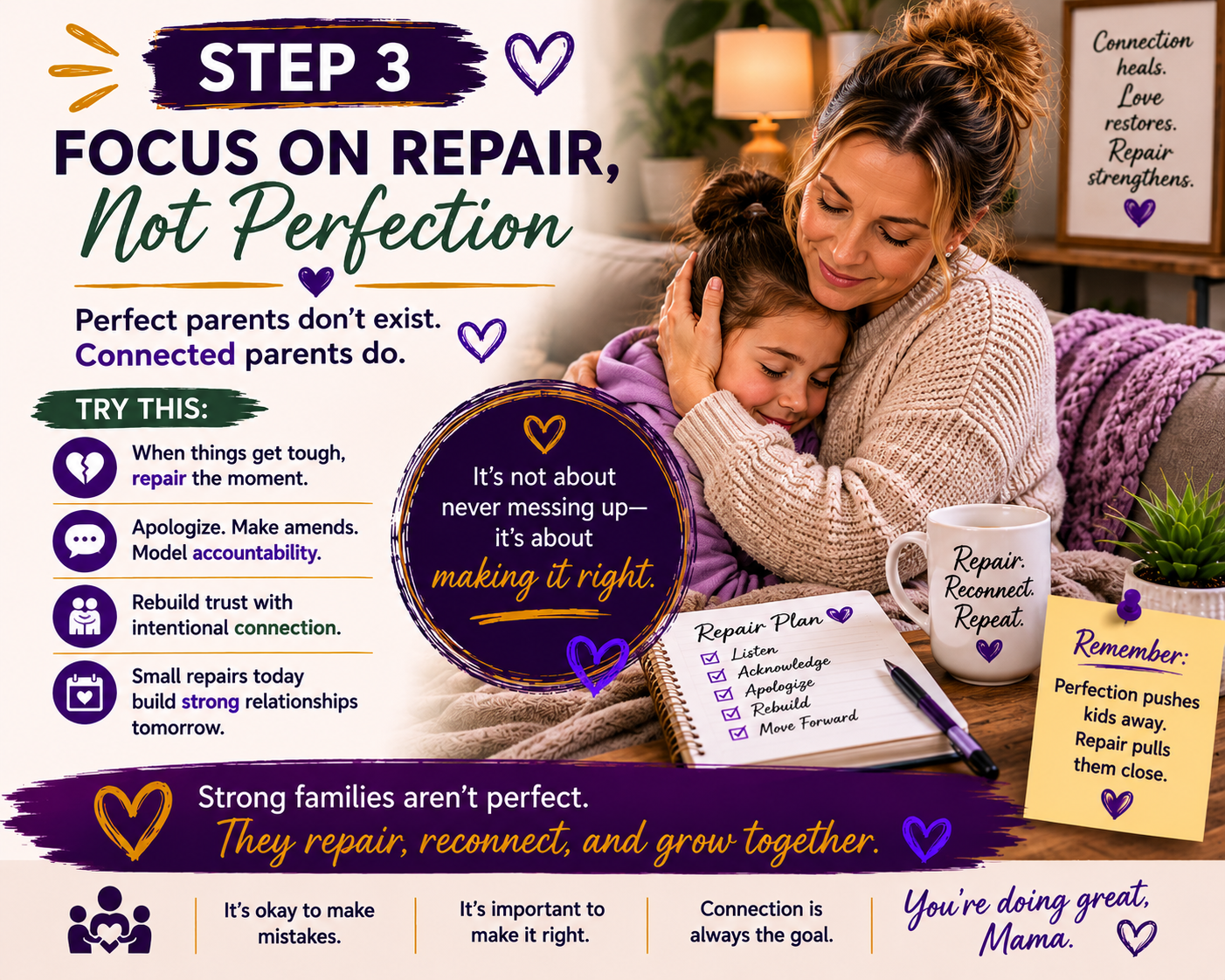
3. Focus on Repair, Not Perfection
Here’s one of the most powerful parenting truths:
Children do not need perfect parents.
They need repairing parents.
What builds trust is not flawless behavior.
It’s your willingness to reconnect after conflict.
How to repair after a hard parenting moment:
Step 1: Calm yourself first
Take 3 slow breaths.
Step 2: Acknowledge what happened
“I raised my voice earlier, and I want to talk about that.”
Step 3: Take responsibility
“That wasn’t the best way for me to respond.”
Step 4: Reconnect
“I love you, and we can work through hard moments together.”
Repair teaches:
Accountability
Emotional safety
Healthy communication
Conflict resolution for kids
This is how you build a calm parenting foundation.
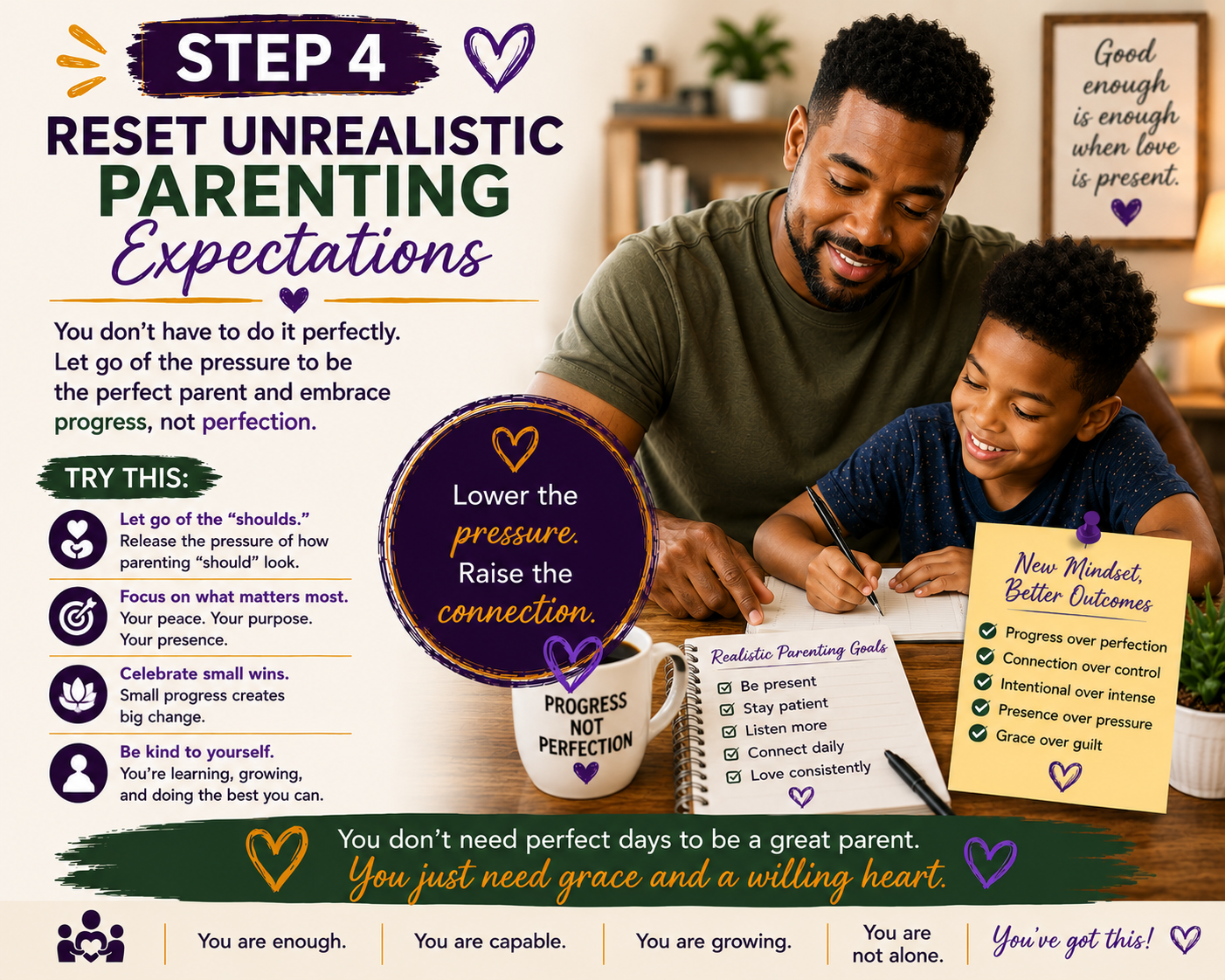
4. Reset Unrealistic Parenting Expectations
Sometimes the pressure isn’t coming from your child.
It’s coming from expectations that were never realistic to begin with.
Many parents quietly carry beliefs like:
I should always know what to do
I should never feel overwhelmed
I should be able to do this alone
These beliefs create burnout.
How to reset:
Ask yourself:
“What expectations am I carrying that need to be released?”
Replace unrealistic expectations with healthier ones:
Instead of:
“I must get everything right.”
Try:
“I am allowed to grow as a parent.”
Instead of:
“I have to do it all.”
Try:
“I can build systems and ask for support.”
This is where strong family systems begin.
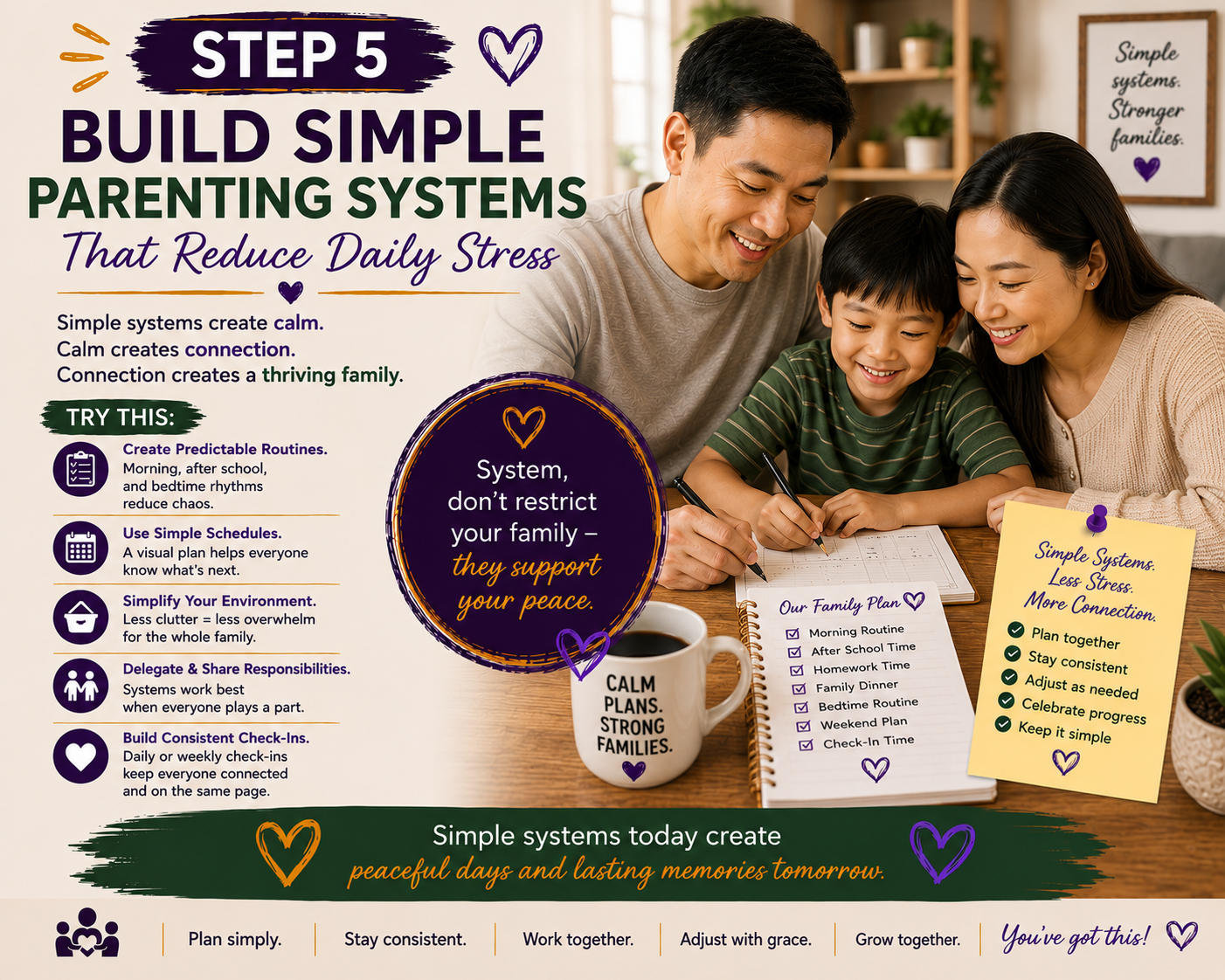
5. Build Simple Parenting Systems That Reduce Daily Stress
Chaos often creates the illusion of failure.
But what many parents need isn’t more effort.
They need a better structure.
When routines are unclear:
Conflict increases
Kids feel less secure
Parents feel reactive
How to create calm parenting routines:
Start with just one anchor routine:
Morning Reset
Wake-up time
Get-ready checklist
Calm transition to school
After-School Reset
Snack
Emotional check-in
Quiet decompression time
Evening Reset
Connection conversation
Prepare for tomorrow
Predictable bedtime rhythm
Simple systems create emotional safety.
And emotional safety supports better behavior.

6. Stop Parenting in Isolation
One of the fastest ways to feel like you’re failing as a parent is trying to figure everything out alone.
Parenting was never meant to happen in isolation.
Support creates clarity.
Community creates resilience.
Coaching creates transformation.
What support can look like:
Parenting education
Coaching conversations
Community accountability
Learning practical tools from experienced guidance
Strong parents ask for support.
That isn’t a weakness.
That’s leadership.
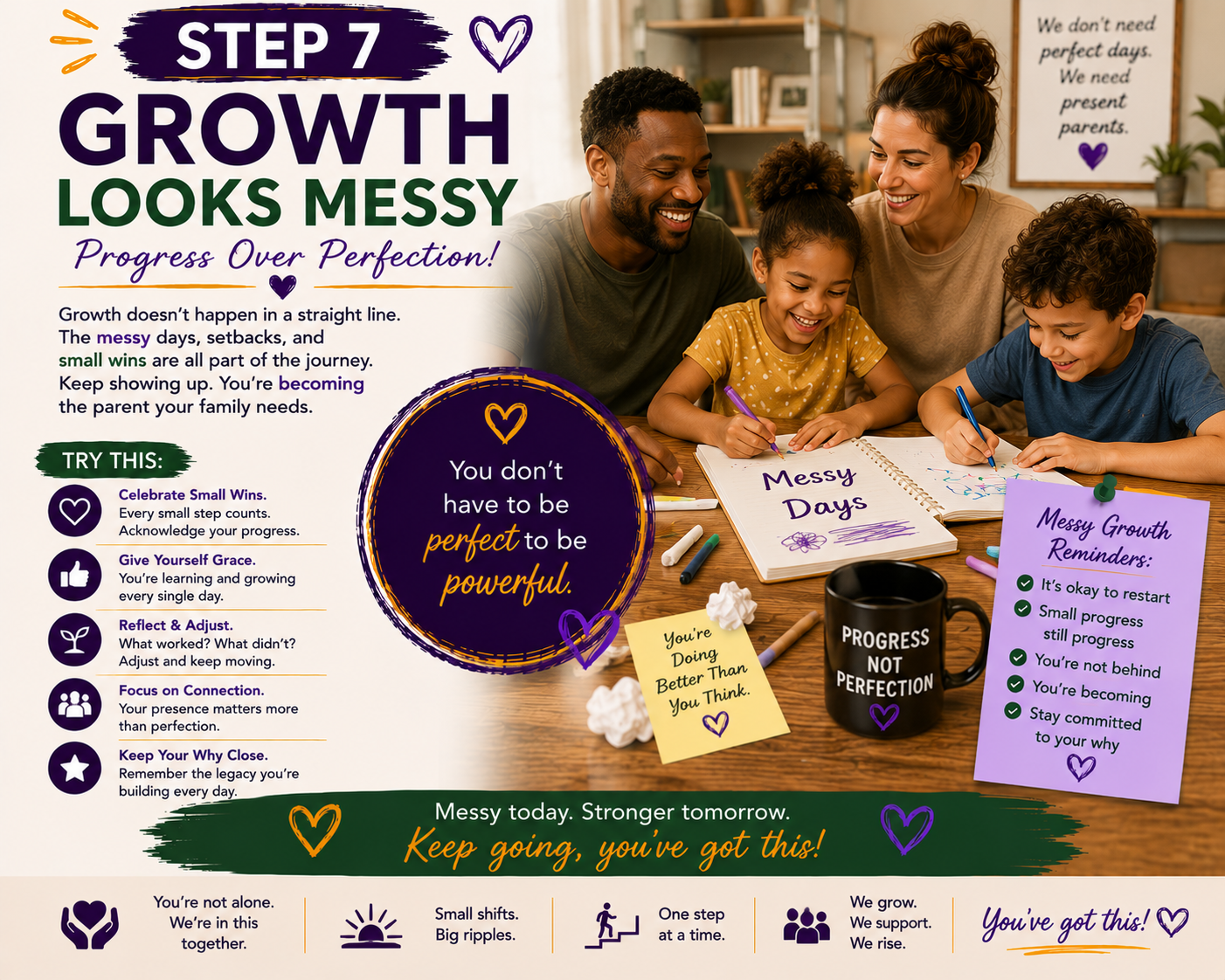
7. Remember: Growth Looks Messy
Progress rarely looks neat.
Sometimes growth looks like:
Pausing before reacting
Repairing faster than before
Yelling less often
Recovering more quickly
Trying again tomorrow
Those are parenting wins.
Small shifts create big ripples.
You are not failing.
You are growing.
And growth is often messy before it becomes visible.

Your Next Step: You Don’t Have to Figure This Out Alone
If this blog spoke to your heart, let this be your reminder:
You are not behind.
You are not broken.
You are learning in real time.
And you deserve practical support that helps you move from chaos to calm.
👉 Join the PNP EnPowerment Academy today
A supportive space for parents ready to build stronger systems, calmer homes, and greater confidence.
👉 Or book a Discovery Coaching Call and let’s build your plan together
Because parenting gets lighter when we do it together.