Why Is My Child Not Listening to Me? (And What To Do About It)
Why Is My Child Not Listening to Me? (And What To Do About It)
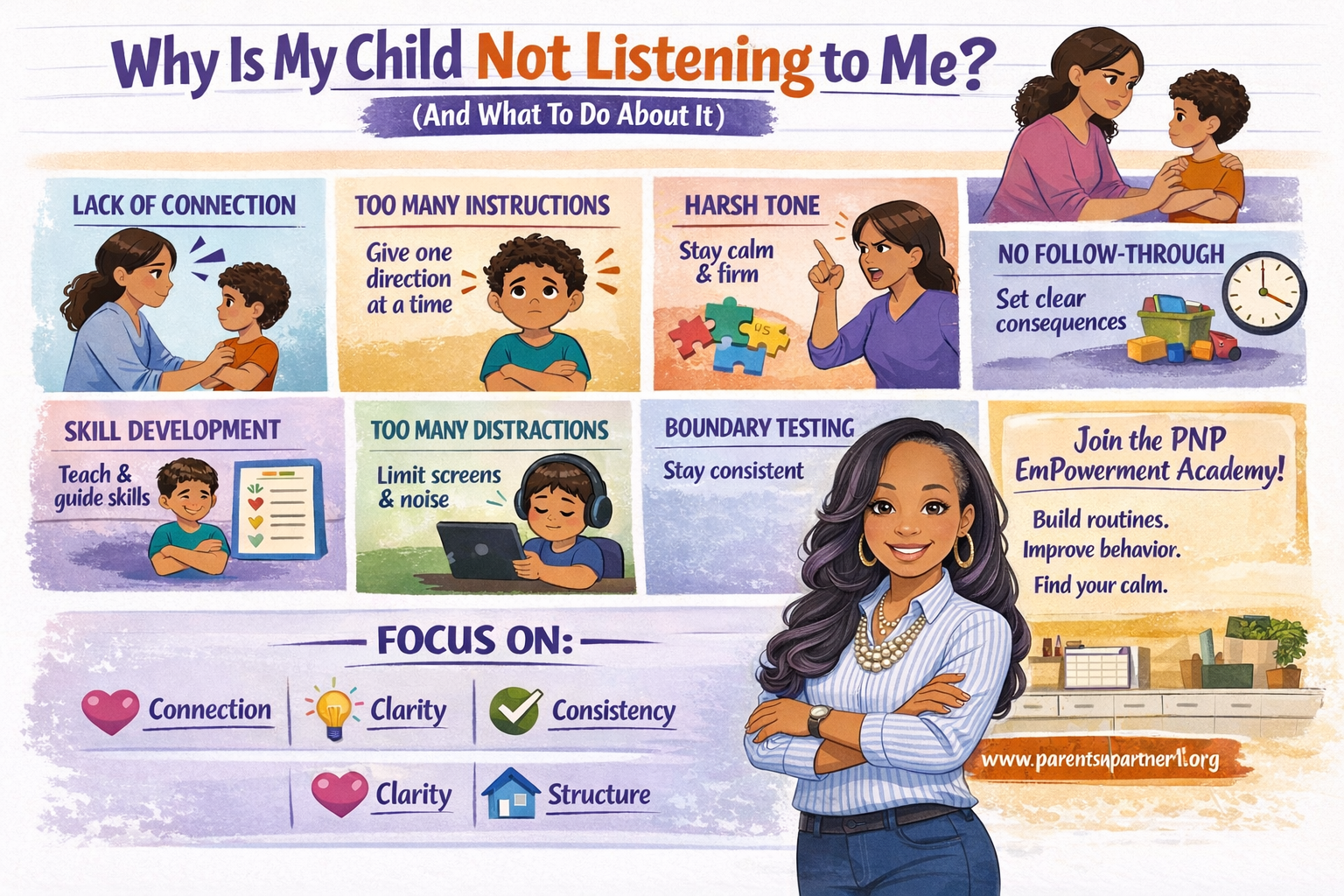
Hey, this is your parenting bestie, Diamond Taylor… and let’s have some real talk for a moment.
If you’ve ever said, “Why is my child not listening to me?” you’re not alone. And more importantly… you’re not failing.
What you’re experiencing isn’t just “disobedience.”
It’s communication, development, and environment, all showing up at once.
Let’s break this down and give you a real, practical game plan you can start using TODAY.
Why Is My Child Not Listening to Me? (And What To Do About It)
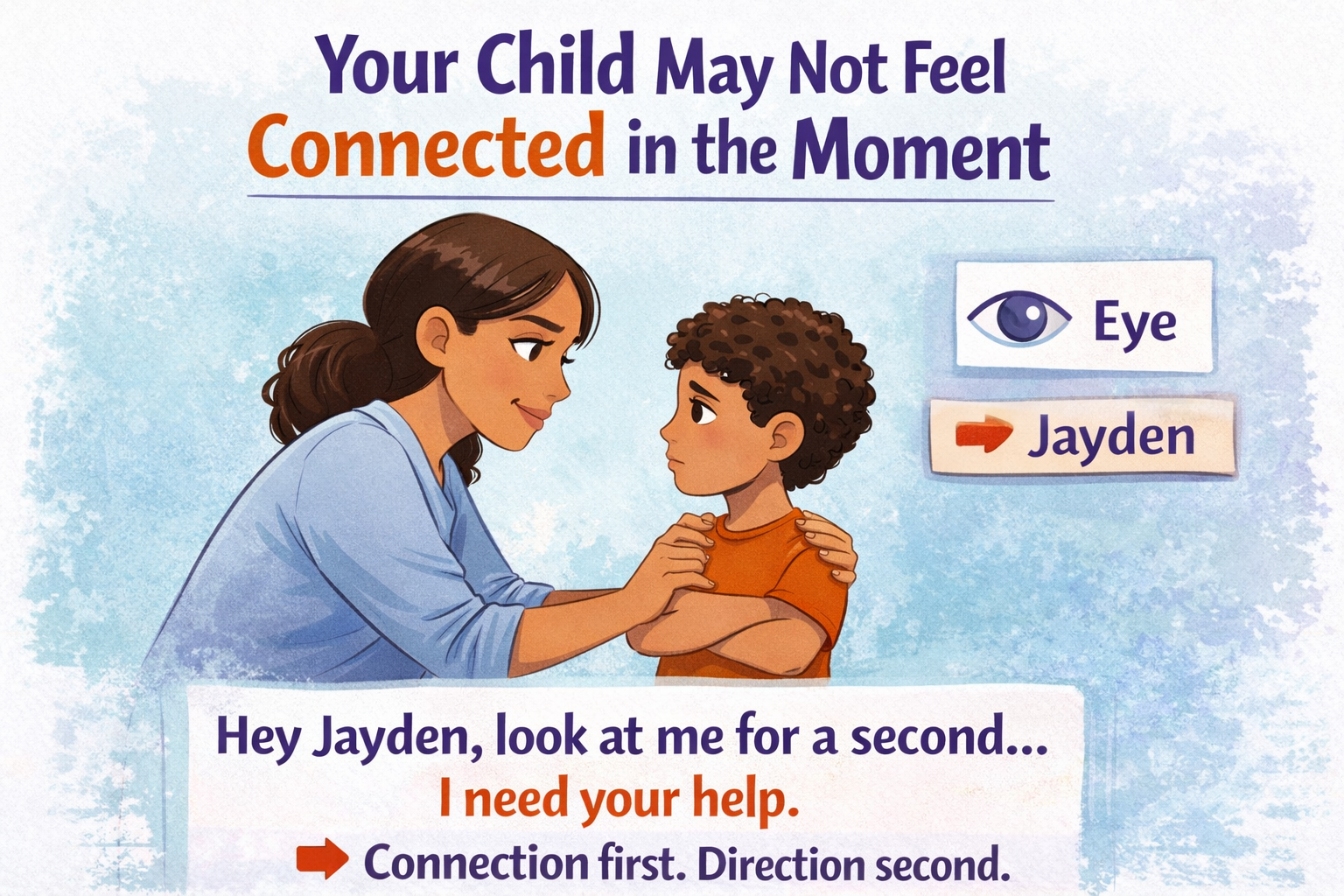
1. Your Child May Not Feel Connected in the Moment
Before kids listen, they need to feel seen, safe, and connected.
What to do:
Get on their level (eye contact matters)
Use their name first
Pause what YOU’RE doing before giving directions
👉 Try this:
“Hey Jayden, look at me for a second… I need your help.”
Connection first. Direction second.
2. You May Be Giving Too Many Instructions at Once
Kids don’t process information the way adults do.
What to do:
Give ONE instruction at a time
Keep it short and clear
Ask them to repeat it back
👉 Instead of:
“Go upstairs, clean your room, and get ready for bed…”
Say:
“Go upstairs and put your toys in the bin.”
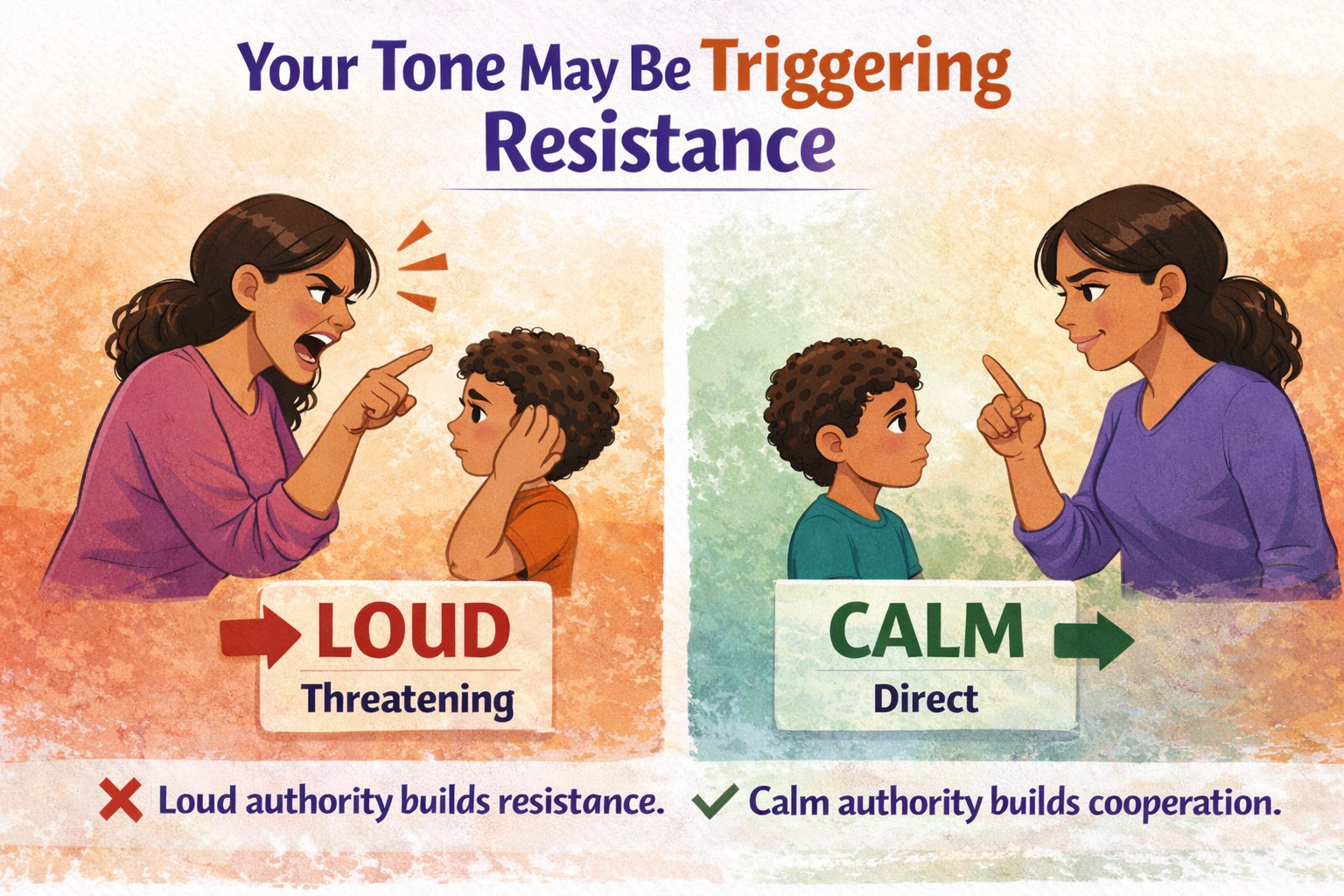
3. Your Tone May Be Triggering Resistance
It’s not just what you say, it’s how you say it.
What to do:
Lower your voice instead of raising it
Stay calm and firm (not emotional)
Avoid sounding like a threat
👉 Calm authority builds cooperation.
👉 Loud authority builds resistance.
4. There May Be No Clear Follow-Through
If kids learn that nothing happens when they don’t listen… they won’t.
What to do:
Set clear expectations ahead of time
Follow through EVERY time
Keep consequences consistent (not emotional)
👉 Example:
“If toys aren’t picked up, they rest for 24 hours.”
Then follow through, no negotiations.
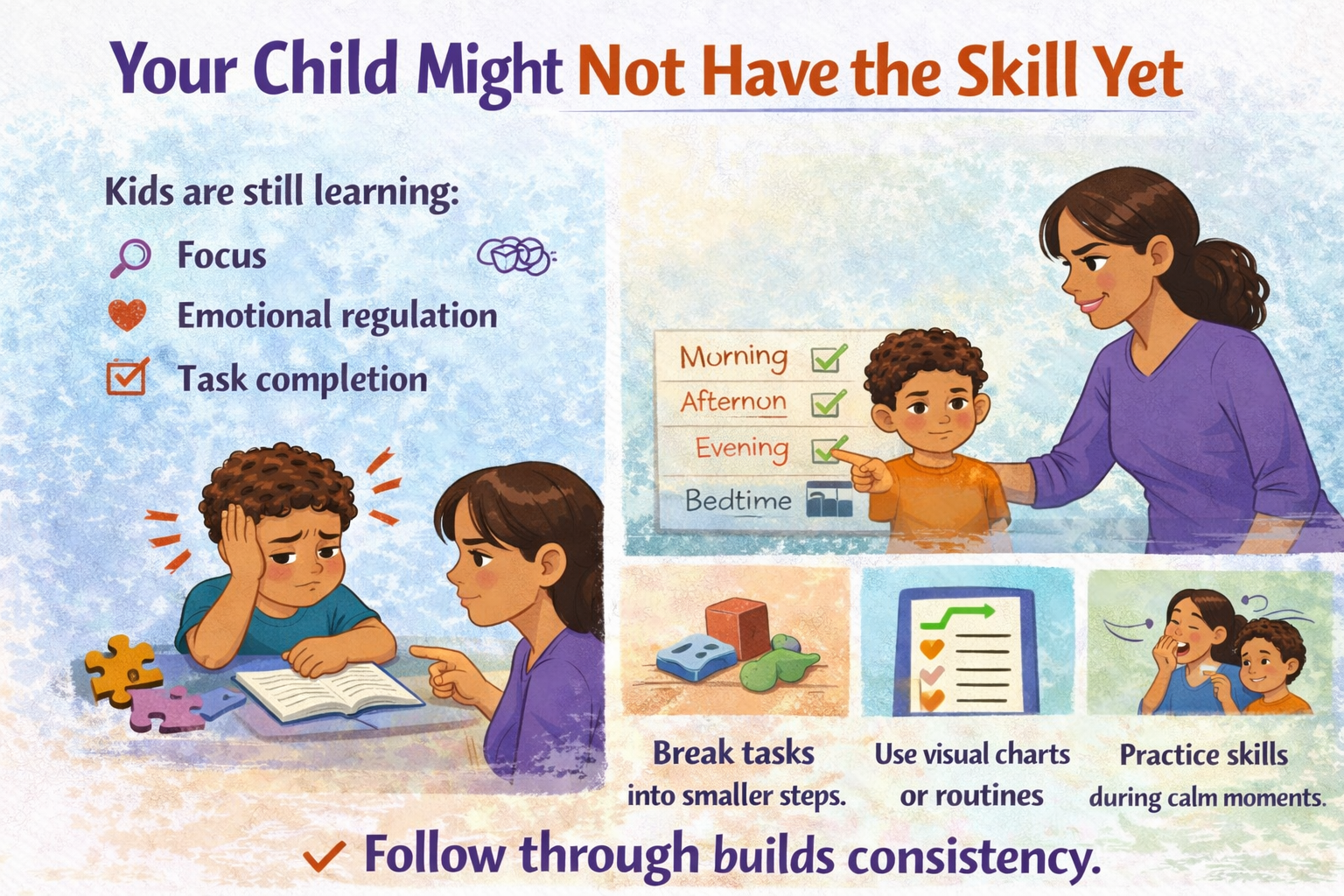
5. Your Child Might Not Have the Skill Yet
Sometimes it’s not defiance, it’s development.
Kids are still learning:
Focus
Emotional regulation
Task completion
What to do:
Break tasks into smaller steps
Use visual charts or routines
Practice skills during calm moments
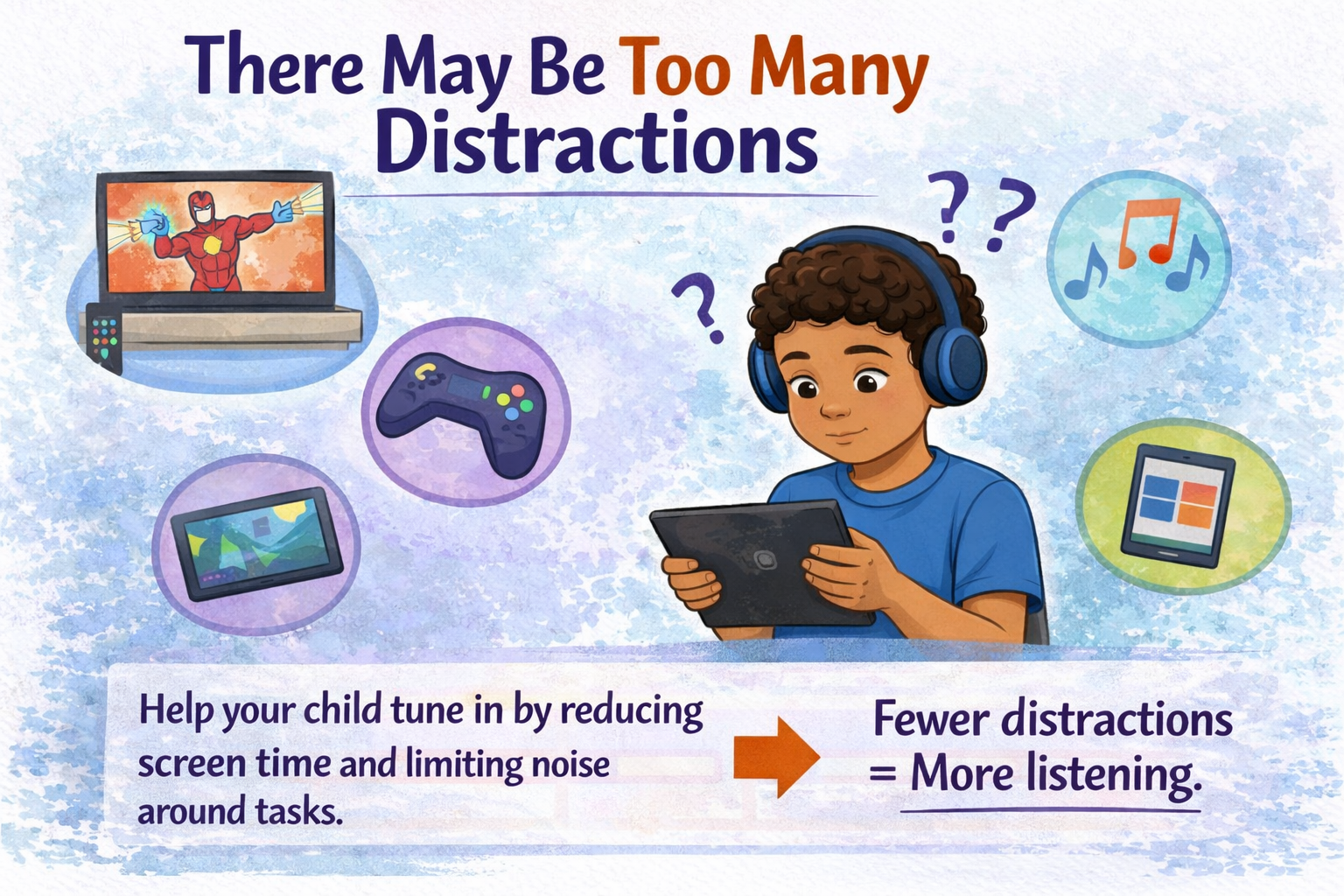
6. There May Be Too Many Distractions
Screens, noise, toys, and chaos compete for your child’s attention.
What to do:
Turn off distractions before giving instructions
Create structured routines
Use transition warnings
👉 “In 5 minutes, we’re cleaning up.”
7. You Might Be Repeating Yourself Too Much
When you repeat directions over and over, kids learn to wait you out.
What to do:
Say it once clearly
Say it again with action
Then follow through
👉 No more “I said it 10 times!”
Say less. Mean more.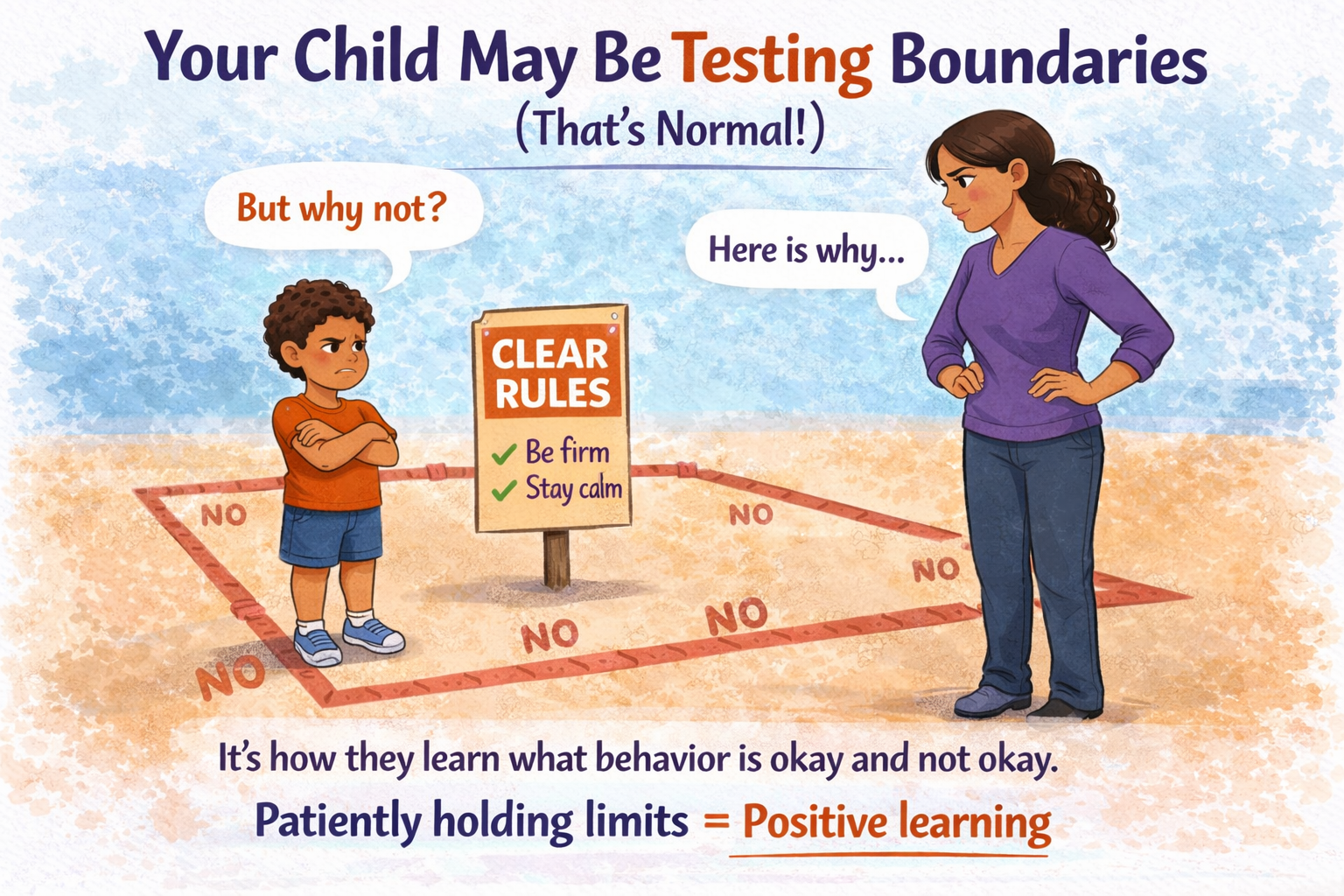
8. Your Child May Be Testing Boundaries (That’s Normal!)
Testing limits is part of healthy development.
What to do:
Stay calm and consistent
Don’t take it personally
Reinforce expectations without power struggles
👉 You’re not in a battle. You’re building leadership.
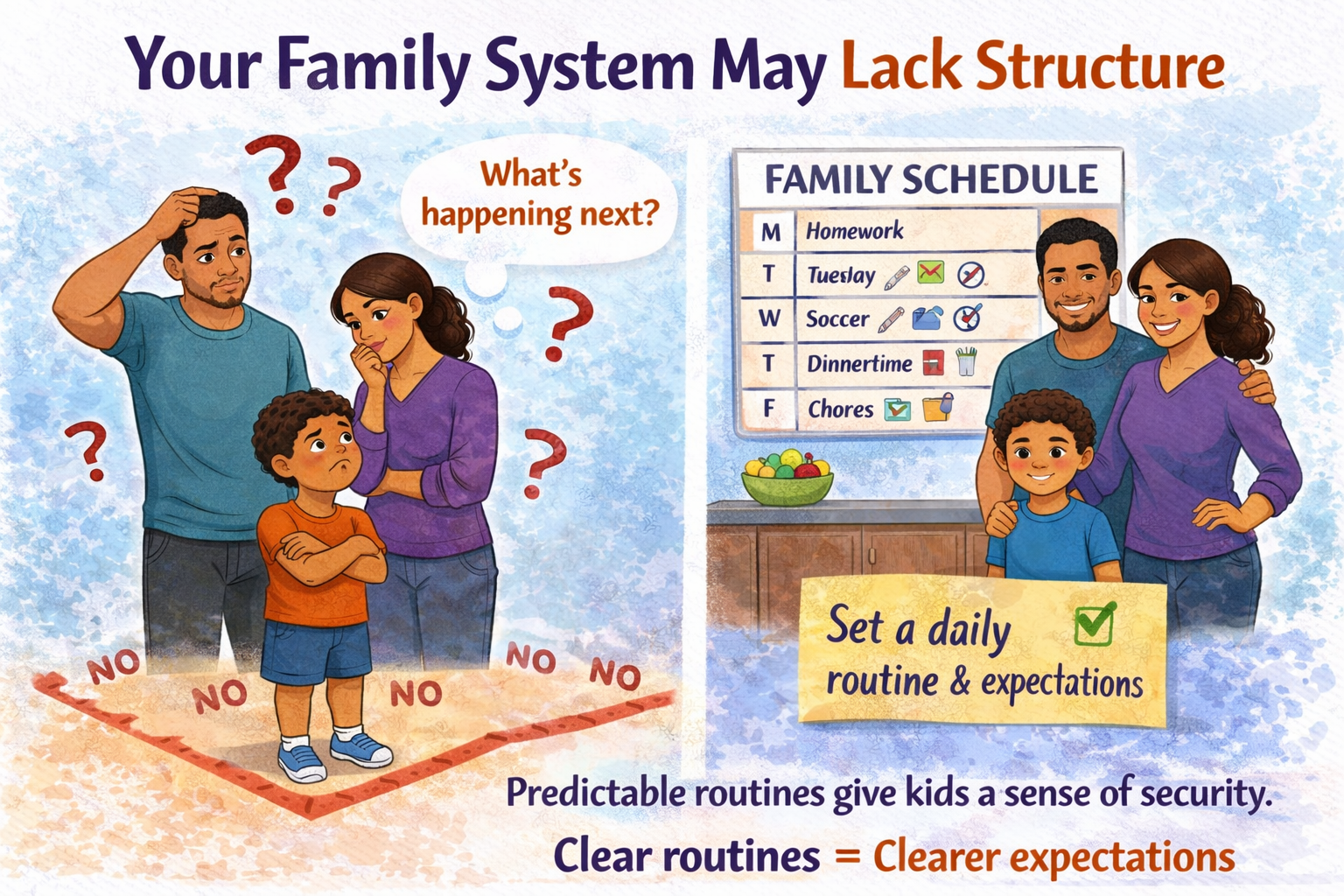
9. Your Family System May Lack Structure
This is the BIG one most parents miss.
When there’s:
No clear routines
Inconsistent expectations
Reactive communication
Kids respond with confusion… not cooperation.
What to do:
Create simple daily routines
Set clear household expectations
Build systems that support behavior
👉 When the system improves, behavior improves.
Your Parenting Game Plan (Start Here Today)
If your child isn’t listening, don’t just focus on correcting them.
Shift your focus to:
✔ Connection
✔ Clarity
✔ Consistency
✔ Structure
That’s how you move from chaos… to calm.
👉 Ready to Take This to the Next Level?
If you’re tired of repeating yourself, feeling overwhelmed, and wondering if you’re doing it “right”…
I’ve got you.
👉 Join the PNP EmPowerment Academy
👉 Learn how to build routines, improve communication, and create a calm, structured home
👉 Connect with a community of parents doing this together
Because it’s always better when we do things together 💜